Scheduler
Scheduler selects the optimal parent peer for current peer to be downloaded and triggers the seed peer back-to-source download or Client back-to-source download at the appropriate time.
Features
- Based on the multi-feature intelligent scheduling system selects the optimal parent peer.
- Build a scheduling directed acyclic graph for the P2P cluster.
- Remove abnormal peer based on peer multi-feature evaluation results.
- In the case of scheduling failure, notice peer back-to-source download.
- Provide metadata storage to support file writing and seeding.
Scheduling
Scheduler maintains task, peer and host resources.
- Peer: a download task for Client
- Host: host information for Client, host and peer have a
1:Nrelationship - Task: a download task, task and peer have a
1:Nrelationship
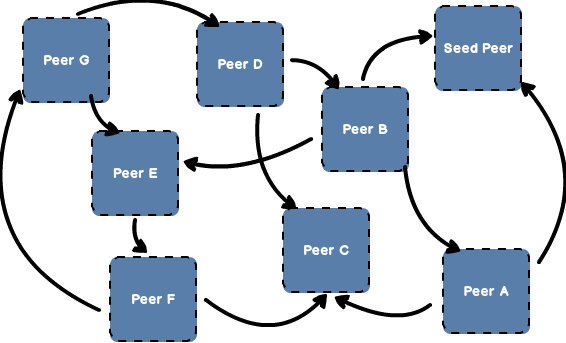
The scheduling process is actually to build a directed acyclic graph according to the peer's load.
Load-Aware Scheduling Algorithm
A two-stage scheduling algorithm combining central scheduling with node-level secondary scheduling to optimize P2P download performance based on real-time load awareness.
Architecture

Stage 1: Central Scheduling
The Scheduler evaluates and returns the top N parent for concurrent piece downloads.
Total Score Formula
TotalScore = (IDCAffinityScore × 0.2) + (LocationAffinityScore × 0.1) + (LoadQualityScore × 0.6) + (HostTypeScore × 0.1)
| Name | Weight | Description |
|---|---|---|
| IDC Affinity Score | 0.2 | Data center proximity preference |
| Location Affinity Score | 0.1 | Geographic location matching |
| Load Quality Score | 0.6 | Load evaluation |
| Host Type Score | 0.1 | Node type preference (seed, peer, etc.) |
Load Quality Score
LoadQualityScore = (PeakBandwidthUsage × 0.5) + (BandwidthDurationRatio × 0.3) + (ConcurrentEfficiency × 0.2)
| Name | Weight | Description |
|---|---|---|
| Peak Bandwidth Usage | 0.5 | |
| Bandwidth Duration Ratio | 0.3 | |
| Concurrent Efficiency | 0.2 |
Stage 2: Secondary Scheduling
Real-time parent selection performed by the peer for each piece based on load quality.
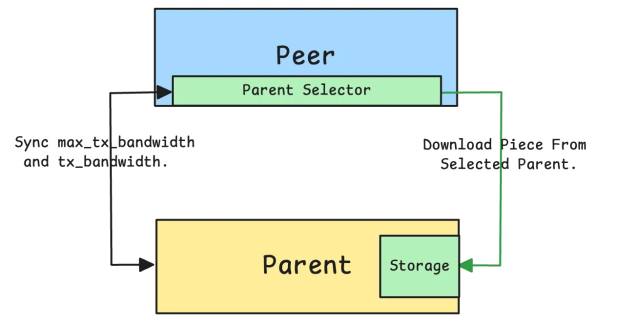
While the central scheduler provides initial candidate selection, the Parent Selector enables dynamic adaptation to:
- Real-time load: Network conditions fluctuate rapidly during downloads.
- Reduced central load: Distributes scheduling decisions across peers.
- Lower latency: Local decisions avoid round-trip delays to central scheduler.